
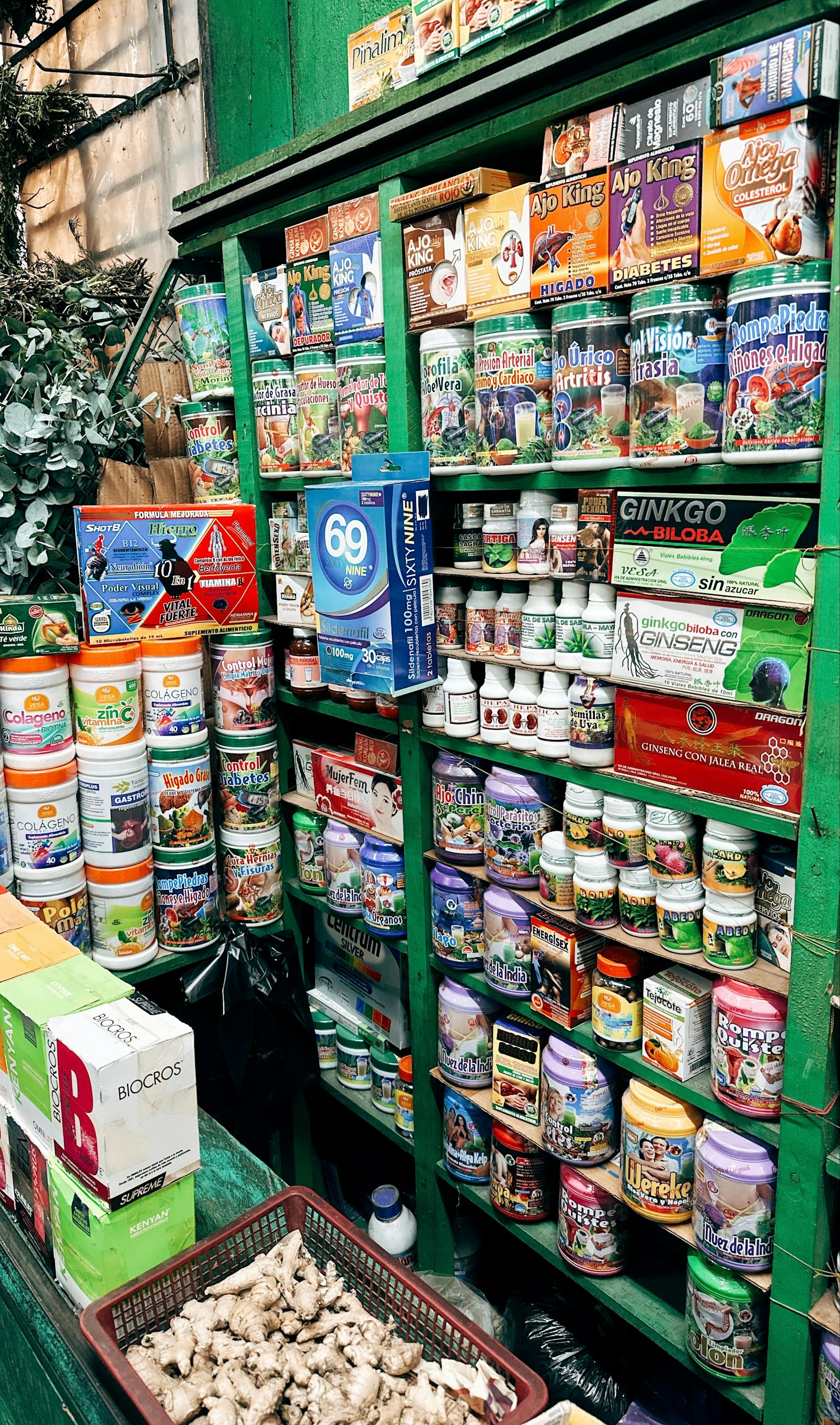
Inside the messy world of menopause supplements, and what actually holds up in real life.
What are supplements, really?
A dietary supplement is a product meant to supplement your diet, usually a vitamin, mineral, herb/botanical, amino acid, or similar ingredient, taken as a pill, capsule, powder, or liquid.
They’re regulated more loosely than prescription drugs, which means they often reach the market without strong evidence that they work or are completely safe.
Bottom line: supplements can fill gaps or target symptoms, but they should sit on top of a decent diet and lifestyle, not replace them.
When should supplements be used?
Supplements make the most sense when:
- There’s a documented deficiency (for example, low vitamin D, iron, or B12 on blood work).
- Your diet pattern or health condition makes it hard to get enough of something through food alone.
- There’s at least some evidence a supplement can help a specific symptom (like modestly reducing hot flashes).
They’re not ideal when:
- You’re taking them “just because,” layering lots of products with overlapping ingredients.
- They’re marketed as hormone replacements or miracle cures without good research.
Always loop in your healthcare practitioner or pharmacist, especially if you’re on medications, have liver/kidney issues, or are considering high doses.
How your diet fits into the decision
Many women don’t meet their nutrient needs from food alone. In US national nutrition data, more than 97% of women aged 31 to 44 did not get enough vitamin D from their diet, and 44% fell short on calcium. Gaps in magnesium, iron, and B12 are also common in midlife, which is why testing, rather than guessing, matters.
So ask yourself (ideally with a practitioner):
- Do I eat regular meals with protein, fruits/veg, and whole grains most days?
- How many ultra‑processed foods and sugary drinks creep in?
- Do I avoid entire food groups (e.g., dairy, meat, gluten)?
The more restrictive or chaotic your diet, the more strategic supplementation might be, but it still works best alongside improving food, not instead of it.
Supplements for menopause: what does the research say?
Important reality check:
Major organizations, including the US National Center for Complementary and Integrative Health (NCCIH), emphasize that many menopause supplements have limited or mixed evidence, and quality between brands varies a lot.
Plant-based therapies like soy isoflavones and red clover are a good example. Some studies show small improvements, but The Menopause Society’s 2023 nonhormone therapy position statement does not recommend soy or other phytoestrogens for hot flashes because the results are inconsistent.
So think of them as “might help a bit” rather than “will fix everything.”
10 supplements commonly considered in midlife (with cautions)
This is not a prescription, just an overview you can discuss with your practitioner. Evidence varies; some are mainly about general health, others about symptoms.
1. Vitamin D
- Why: Crucial for bone health, immune function, and possibly mood; deficiency is extremely common in women.
2. Calcium
- Why: Supports bone health; needs rise in midlife as estrogen declines.
3. Magnesium
- Why: Involved in muscle and nerve function, sleep, blood sugar, and bone health; many women don’t meet needs from diet.
4. Omega‑3 fatty acids (fish oil)
- Why: May support heart health, triglycerides, inflammation, and mood.
5. Vitamin B12
- Why: Important for energy metabolism and nerve health; low levels more common in older adults, vegans, and people on certain medications (like metformin).
6. Iron (if deficient)
- Why: Heavy periods in perimenopause can deplete iron stores, leading to fatigue, shortness of breath, hair shedding, and restless legs.
7. Phytoestrogens (soy isoflavones, red clover)
- Why: Plant compounds that weakly mimic estrogen. Some women report modest relief, but the evidence is inconsistent, and The Menopause Society does not recommend them for hot flashes.
8. Black cohosh
- Why: Probably the most studied herb for hot flashes; some trials suggest benefit vs. placebo, others do not.
9. St. John’s wort (sometimes combined with other herbs)
- Why: Used for mild to moderate depression; sometimes studied in combination formulas for mood and vasomotor symptoms.
10. Probiotics
- Why: Emerging evidence that gut health can influence immunity, metabolism, and possibly mood; some interest in vaginal and urinary health too.
Again, not everyone needs all, or even most, of these. This is your menu/information for a conversation with a clinician who knows your history.
Protein powders & amino acids: when do they make sense?
Let’s talk about the “supplements” that come in tubs and shakers: protein powders and amino acids.
Why protein matters so much in midlife
As we move through perimenopause and menopause, we naturally lose muscle and bone unless we actively protect them with enough protein plus resistance training.
Research suggests many women need more protein than the standard recommendation of 0.8 g per kg of body weight. The PROT-AGE study group recommends 1.0 to 1.2 g per kg per day for adults over 65, and a large meta-analysis of resistance training studies found muscle gains plateaued at about 1.6 g per kg per day.
Higher protein intakes in postmenopausal women have been linked with:
- More lean muscle mass and strength.
- Lower risk of frailty and better physical function.
- Better weight and blood‑sugar control, which can help with energy and cravings.
That’s where protein supplements can be a tool, especially if you:
- Struggle to hit protein targets with food.
- Are on the go a lot.
- Don’t love cooking or large portions of protein foods.
Protein powders: what and how to use them
What they are: Concentrated sources of protein, often from whey, casein, egg, collagen, soy, pea, or mixed plant sources, usually giving 20-30 g of protein per scoop.
How they can help in menopause:
- Make it easier to hit that “30-ish grams of protein per meal” target, especially at breakfast, which is often low in protein.
- Support muscle repair and growth when paired with strength training, helping counter age‑related muscle loss.
- Help with satiety and blood‑sugar control when used in balanced meals or snacks.
When to consider them:
- You routinely fall short on protein even when you try (for example, you’re only getting 40-50 g per day and aim to be closer to 90-120 g).
- You’re doing strength training and want to support muscle and recovery.
- You need quick, portable options for busy mornings or post‑work workouts.
Simple ways to use protein powder:
- Add a scoop (20-30 g) to smoothies and bowls with fruit, nut butter, and some greens.
- Stir into overnight oats or yogurt.
- Shake with water or milk/plant milk after a workout if you can’t have a full meal right away.
If you tolerate dairy, whey protein is well‑studied and rich in leucine, a key amino acid for muscle building.
If you don’t tolerate dairy, a good‑quality soy or mixed plant protein can work too.
What about amino acid or BCAA supplements?
Amino acids are the building blocks of protein. Branched‑chain amino acids (BCAAs): leucine, isoleucine, and valine, are often sold as flavored powders for energy and recovery.
Some research shows BCAA supplements can support post‑exercise muscle recovery and may improve soreness and function.
However, if you’re already getting enough high‑quality protein across the day, especially from protein‑rich foods or whey/soy protein powder, you’re already getting those amino acids.
For most women, it’s more impactful to:
1. Hit daily protein needs.
2. Spread protein across the day (aim 25-30+ g at breakfast, lunch, and dinner + snacks).
3. Pair protein with strength training a few times per week.
BCAAs and other amino acid blends are more “nice‑to‑have” than essential, and I’d only consider them after the basics are nailed and in conversation with a practitioner, especially if you have kidney issues, are on medications, or follow a very restricted diet.
What are Adaptogens and can they help?
Adaptogens are a group of herbs thought to help the body adapt to stress and support balance in the hypothalamic-pituitary-adrenal (HPA) axis (your main stress‑response system).
Common examples include ashwagandha, rhodiola, holy basil, and ginseng.
Some research and clinical experience suggest adaptogens may:
- Reduce perceived stress and fatigue.
- Support energy and mental focus.
- Potentially help regulate cortisol patterns.
Why this matters in menopause: estrogen interacts with the stress system, and hormonal shifts can make women more vulnerable to stress‑related symptoms, especially during perimenopause and menopause.
Cautions:
- Quality and dosing are variable; evidence is still evolving.
- Some adaptogens can interact with medications (blood pressure meds, thyroid meds, psychiatric meds, blood thinners).
If you’re curious about adaptogens, work with a practitioner trained in herbal medicine rather than self‑experimenting with multiple products.
How to approach supplements without overwhelm
A simple way to think about it:
1. Start with foundations: regular meals, protein, fibre, hydration, movement, sleep, stress support. Supplements work better on this base.
2. Check for deficiencies: Ask your clinician about vitamin D, B12/folate, iron/ferritin, and any others indicated by your symptoms.
3. Target 1 to 2 priorities at a time:
- Bone and general health → vitamin D, magnesium, calcium (food first).
- Fatigue and mood → investigate iron/B12/folate, sleep, stress; consider omega‑3s or adaptogens with guidance.
- Hot flashes → discuss hormone therapy and phytoestrogens or black cohosh with your practitioner.
4. Watch for interactions and side effects: Share everything you take (including “natural” products) with your doctor or pharmacist.
5. Re‑evaluate regularly: You may not need the same supplements forever; re‑check labs and symptoms every 6-12 months.
Final thoughts
Supplements in midlife are best used like targeted tools, not a grab‑bag of hope.
The most sustainable plan combines:
- A realistic, nourishing way of eating.
- Smart testing when needed.
- A short list of well‑chosen supplements with decent evidence and medical oversight.
And if you know a friend who might benefit from this, please share it with her.
Free: your 14-day symptom tracker
“I just don’t feel like myself” isn’t enough to get answers. See It. Track It. Say It. helps you track your symptoms for 14 days, spot the patterns, and walk into your next appointment with something concrete to show. Free, and in your inbox in a minute.
Want to talk it through with me? Book a free 30-minute discovery call.
Deneatra Ford, RHC, CHNP, is a Certified Holistic Nutrition Practitioner and founder of Smart Wellness Canada Ltd. After more than 20 years in corporate leadership, she now supports midlife women and the organizations they work for across Canada.
This article is for education only and isn’t medical advice. Talk with your doctor or pharmacist before starting any supplement, especially if you take medication.
Sources
- NCCIH, Menopausal symptoms and complementary health approaches
- The Menopause Society, 2023 Nonhormone Therapy Position Statement release
- Socioeconomic inequalities and nutrient intake in women of childbearing age, Nutrients 2022 (NHANES)
- PROT-AGE Study Group, Evidence-based recommendations for optimal dietary protein intake in older people, JAMDA 2013
- Morton RW et al., Protein supplementation and resistance training: systematic review and meta-analysis, Br J Sports Med 2018
- NIH Office of Dietary Supplements, Vitamin D fact sheet
Leave a Reply