
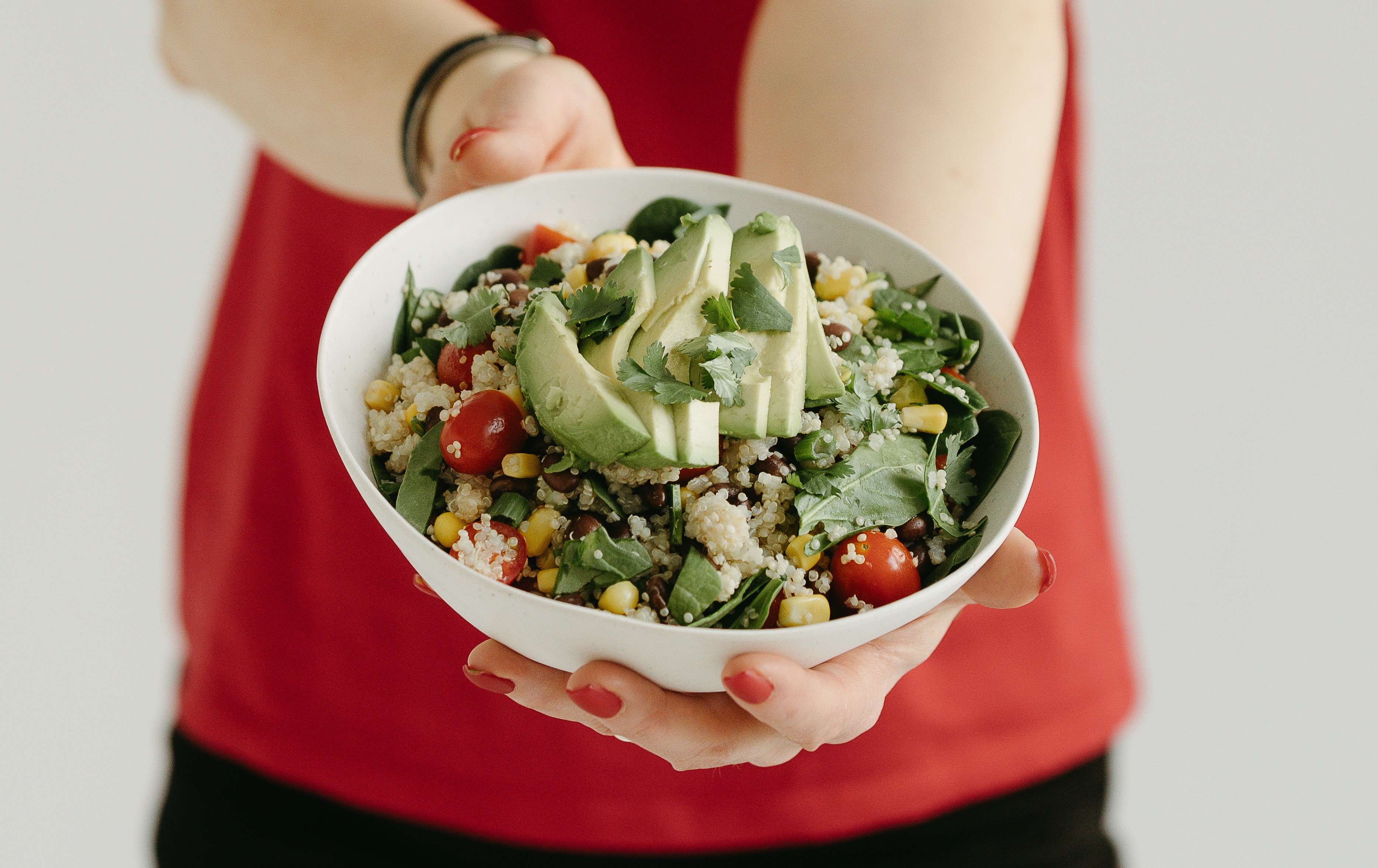
What you eat in midlife isn’t just fuel. It’s a conversation with a body whose rules just changed.
You eat the same breakfast you’ve eaten for twenty years. The same lunch. The same sensible dinner.
And somehow your body is responding like you changed everything.
The waistband is tighter. The 3 p.m. crash hits harder. You wake at 2 a.m., hot and wired, and start to wonder if you’ve lost your discipline.
You haven’t. Your hormones changed the conversation, and nobody handed you the new script.
I went through a hard menopause myself. I was told it was “just getting older.” It wasn’t. As a holistic nutrition practitioner, food was one of the first places I found my way back to myself.
So let’s talk about what the research actually says about food and hormones in midlife, what’s hype, and the shifts I’d start with this week.

What really changes when estrogen drops
Estrogen does far more than run your cycle. It influences where you store fat, how you keep muscle, how strong your bones stay, and how your body handles cholesterol.
When it declines, the scale doesn’t tell the whole story. The Study of Women’s Health Across the Nation (SWAN) followed women through menopause and found that at the start of the transition, the rate of fat gain doubled while lean muscle began to decline, continuing until about two years after the final period. Total weight didn’t necessarily climb faster. What your body is made of changed.
Where that fat sits changes too. Research reviews agree that menopause is linked to more visceral fat, independent of age. That’s the deeper fat around your organs, and it travels with insulin resistance.
Here’s what that means for you: the same food, in a body with less muscle and more visceral fat, lands differently. That isn’t a willpower problem. It’s a physiology update, and your plate needs one too.
Five food shifts that work with your hormones, not against them
1. Make protein the anchor of every meal
Muscle is metabolic. It helps your body use blood sugar, and it protects your strength and balance for decades to come. As estrogen drops, muscle gets harder to keep, and protein gives your body what it needs to hold on to it.
Try this: build each meal around a palm-sized portion of protein, such as eggs, Greek yogurt, fish, chicken, lentils, or tofu. Then lift something heavy. Food alone won’t rebuild muscle.
2. Build plates that steady your blood sugar
Because visceral fat and insulin resistance tend to rise together, how you build a plate matters more than it used to. That coffee-and-muffin breakfast that once carried you to lunch may now carry you straight to a crash.
Try this: fill half your plate with vegetables, a quarter with protein, and a quarter with fibre-rich carbohydrates like beans, oats, or whole grains. Add some healthy fat. Never eat carbohydrates alone.
3. Feed your bones before you need to
Bone loss speeds up around menopause. In the Geelong Osteoporosis Study, women not using hormone therapy lost bone fastest in the first five years after menopause. Osteoporosis Canada’s 2023 guideline suggests 1,200 mg of calcium a day for women over 50, ideally from food, plus a vitamin D supplement of at least 400 IU daily.
Try this: add calcium at every meal: dairy, fortified plant milk, canned salmon or sardines with the bones, calcium-set tofu, and leafy greens. Ask your healthcare provider before taking more than the guideline suggests.
4. Eat for your heart, starting now
Heart health is a menopause issue. In SWAN, LDL cholesterol rose within the year before and after the final period, a change tied to menopause itself rather than aging alone.
Try this: eat more soluble fibre from oats, barley, beans, and ground flax. Choose fish and olive oil more often, and ultra-processed foods less often. Ask your doctor to check your cholesterol now, not years from now.
5. Get honest about alcohol
That nightly glass of wine to unwind deserves a second look. Canada’s Guidance on Alcohol and Health says two standard drinks or fewer per week is low risk, and three to six a week raises the risk of several cancers, including breast cancer.
Try this: take two alcohol-free weeks. Track your sleep, your energy, and your night sweats. Let your own body give you the answer.
The soy question, honestly
You’ve probably been told soy or “phytoestrogens” will fix your hot flashes. I’d rather tell you the truth than sell you a myth.
Soy isoflavones can bind to estrogen receptors, which is why the idea caught on. But The Menopause Society reviewed the evidence in its 2023 Nonhormone Therapy Position Statement and did not recommend soy foods or soy extracts for hot flashes, because results have been inconsistent.
That doesn’t make soy bad. Tofu, edamame, and tempeh are excellent sources of protein and fibre, and they belong on many midlife plates. Just eat them for what they reliably do, not for what a label promises.
One more honest truth: food supports your hormones, but it doesn’t replace medical care. If hot flashes, sleep, or mood are taking over your life, you deserve a real conversation with your doctor about every option, including hormone therapy.
You’re not broken. Your plate just needs new rules.
You don’t need a stricter diet. You need a smarter one, built for the body you have now.
Start with one shift this week. Just one. Protein at breakfast, or two alcohol-free weeks, or calcium at every meal. Notice what changes. That’s how you start trusting your body again.
Free: your 14-day symptom tracker
“I just don’t feel like myself” isn’t enough to get answers. See It. Track It. Say It. helps you track your symptoms for 14 days, spot the patterns, and walk into your next appointment with something concrete to show. Free, and in your inbox in a minute.
Want to talk it through with me? Book a free 30-minute discovery call.
Want a plate built for your body? See the Optimal Midlife Eating Plan.
With you,
Deneatra Ford, RHC, CHNP
Founder and Lead Practitioner, Smart Wellness Canada
Women’s Wellness at Home and Work
This article is for education only and isn’t medical advice. Talk with your healthcare provider before changing supplements or medications.
Sources
- Greendale et al., Changes in body composition and weight during the menopause transition, JCI Insight (SWAN)
- Review: menopause and the metabolic syndrome, Therapeutic Advances in Cardiovascular Disease
- Holloway-Kew et al., BMD loss following recent menopause, Calcified Tissue International 2025
- Osteoporosis Canada, Clinical Practice Guideline 2023 Update, quick reference
- SWAN lipid changes and age at final menstrual period, Journal of the American Heart Association
- Canada’s Guidance on Alcohol and Health 2023, summary via Alberta Health Services
- The Menopause Society, 2023 Nonhormone Therapy Position Statement release
Leave a Reply